
Venture Capital: 400 Years of Adventurers
Insights from Fabrica Ventures Team.

A Tale of Two Unicorn Generations
October 23, 2026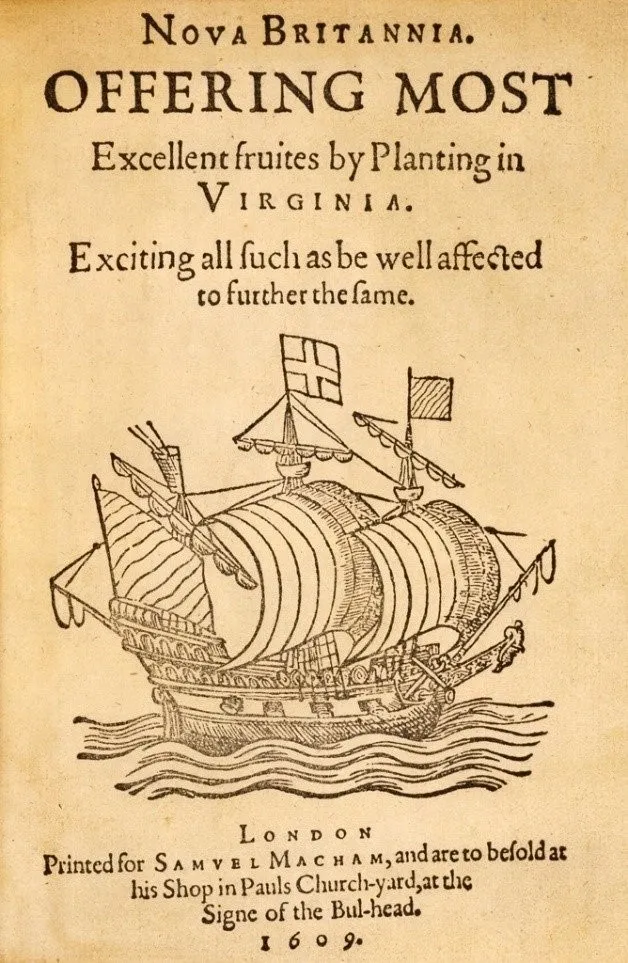
Americana: A 400-Year History of American Capitalism, by Bhu Srinivasan, has surprised me from its very first chapter, appropriately titled Venture.
It opens with a fascinating question: How did a group of disenfranchised religious separatists — the Pilgrims — manage to finance a large ship, hire an experienced crew, and secure enough provisions for a transatlantic voyage to the New World? Even for sovereign governments in the early seventeenth century, financing such an expedition was no small undertaking.
The answer is remarkably similar to how venture capital works today.
In 1606, King James I of England granted a charter to the Virginia Company of London, a private enterprise established to develop commercial opportunities in the New World. While the company managed its commercial operations, the Crown retained oversight through the Council for Virginia.
The arrangement reflected an early form of public-private partnership: the government granted exclusive rights to explore, settle, and exploit economic opportunities, while private investors supplied the capital and assumed much of the financial risk.
After lengthy negotiations, the Virginia Company granted the Pilgrims permission to establish a settlement in America.
But permission was only the beginning. They still needed money.
Their solution was to approach the Merchant Adventurers of London, a group of wealthy English financiers willing to invest in speculative overseas ventures.
Formal investment terms were negotiated, much like a modern VC term sheet.
Interestingly, the Merchant Adventurers were not organized as a single investment fund. They operated more like an investment network, with individual members choosing which ventures to finance.
Think of an early syndicate of venture capital investors.
As overseas expeditions became increasingly capital-intensive, a financial innovation gained prominence: the joint-stock company. Instead of relying on a single wealthy backer or a small partnership, these companies could raise money from numerous investors, each owning shares in the enterprise. These shares could be transferred, providing a degree of liquidity that traditional partnerships generally lacked.
Another important development was limited liability: investors could participate in highly speculative ventures without necessarily exposing their entire personal fortunes.
Risk diversification, syndicated investments, transferable equity, and limited liability. The foundations of modern venture capital were already taking shape.
The Virginia Company’s financing arrangements reveal another remarkable parallel.
An investor who remained in England could acquire a share for £12 and 10 shillings. But a man willing to travel to Virginia and work for the company for seven years would receive a share without contributing cash.
In other words, investors contributed capital, while settlers contributed labor in exchange for equity.
The company would finance the settlement’s food, materials, and maintenance, while retaining ownership of its assets and control over economic activities. After seven years, the plan was to distribute the company’s assets, including settled land, among its shareholders. For an impoverished young Englishman, the opportunity was compelling: seven years of labor could earn him an ownership interest equivalent to that of a wealthy investor who had contributed substantial capital.
Sound familiar? Today, startups routinely compensate founders and employees with equity, aligning their economic interests with those of financial investors.
And venture funds invest in risky businesses, pool capital from multiple investors, negotiate governance rights, and ultimately seek to return capital through liquidity events.
Of course, the analogy is not perfect. Nevertheless, the similarities are striking.
Conclusion
Four hundred years ago, the fundamental challenge was already the same: how to mobilize private capital, distribute extraordinary risks, incentivize entrepreneurs and workers, and share the rewards of uncertain ventures.
The technologies and markets have changed dramatically. The financial logic behind venture capital? Much less than we might imagine.
VC is not simply a Silicon Valley invention. It is a modern expression of a centuries-old financial solution to risk.