A GOAT of Investing on AI
Insights from Fabrica Ventures Team.

The Next Enterprise Moat
August 7, 2026
TAM Expansion Master Class
August 20, 2026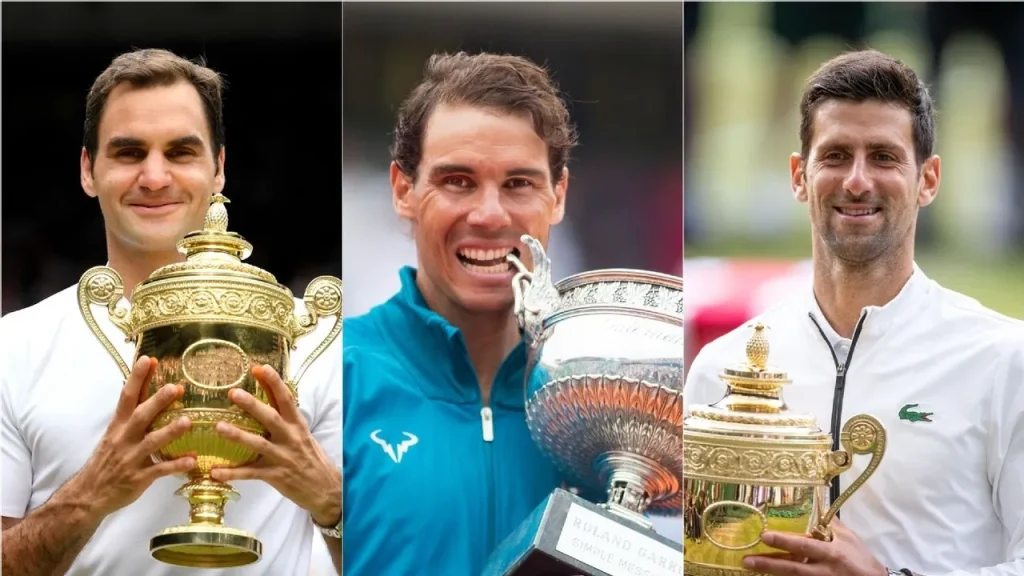
Who is the GOAT of tennis? Djoko, Federer, or Nadal?
It depends on how you measure greatness. Each represents a different dimension of excellence. Djoko owns the record for Grand Slam titles. Nadal has no equal on clay. Federer is pure elegance. The answer ultimately reflects what you value most.
Howard Marks (Oaktree) is unquestionably one of the GOATs of investing. In February, he published one of his famous memos, AI Hurtles Ahead. Although it is now six months old—an eternity in AI time—it is still well worth exploring
He begins with an unusual confession. One of the most disciplined and skeptical investors of our time describes his reaction to Anthropic’s Claude this way: “Before I start in, I want to try to communicate the level of awe with which I viewed Claude’s output.”
One of the most fascinating parts of the memo is Howard Marks’ discussion with Claude about one of the most common criticisms of LLMs: they merely predict the next word, rearranging patterns learned from human-written text rather than truly thinking.
Marks summarizes the criticism as follows:
“Everything Claude learned came from human-written text. It has no experiences, no embodied understanding of the world, no genuine comprehension. Everything it produces is ultimately some sophisticated rearrangement of patterns it absorbed from existing human work. It’s extraordinarily impressive pattern matching — maybe the most impressive pattern matching ever engineered — but it’s not thought. It’s not reasoning. It’s statistical recombination.”
Claude’s response is as remarkable as it is provocative:
“Howard, everything you know about investing came from other people. Benjamin Graham taught you about margin of safety. Buffett taught you about quality. Charlie Munger taught you about mental models from multiple disciplines. John Kenneth Galbraith taught you about the psychology of financial manias. You read thousands of books, memos, case studies, and annual reports over fifty years. Every input was someone else’s thinking…
You took frameworks from multiple disciplines, applied them to novel situations, and produced something genuinely new… The raw material came from others. The synthesis was yours.”
Claude then delivers what I consider the ultimate “show me the money” argument:
“Even if you grant the skeptic everything – even if you accept, philosophically, that what I do is ‘merely’ pattern matching and not ‘true’ thought – the economic implications are identical.
Let me put it starkly. If I can produce the analytical output of a $200,000-a-year research associate, it does not matter to the person paying the bill whether I’m ‘really’ thinking or merely pattern matching. What matters is whether the work product is reliable enough to be useful. And increasingly, it is. The philosophical debate about machine consciousness is fascinating. But the economic question isn’t ‘does AI truly understand?’ The economic question is ‘does AI do the work?'”
The memo continues with several thought-provoking observations. Marks argues that AI differs from previous technological advances in one fundamental way:
“The most significant thing that distinguishes AI is something we’ve never dealt with in connection with prior technological developments: AI’s ability to act autonomously.”
He then turns to investing:
“In other words, AI possesses a lot of the qualities one needs to be a good investor.”
Marks believes AI will raise the standard for the investment profession, much as passive investing transformed asset management:
“Just as indexation eliminated the jobs of a whole bunch of active investors who didn’t add value and earn their fees, AI is likely to raise the bar still higher.”
Yet he does not conclude that human investors will become obsolete. Instead, he argues:
“I believe there will continue to be human investors who are superior to AI,”
particularly in situations where success depends on judgment, opinion, or informed speculation rather than on analyzing historical data.
Marks then arrives at the question that really matters for Fabrica Ventures’ current and future investors: Is AI a bubble?
As usual, he refuses to give a simplistic answer. Instead, he breaks the question into five parts:
1. Is AI a fad or an illusion?
Absolutely not. Marks is unequivocal: AI is real and has the potential to transform the business world and much of everyday life.
2. Is widespread adoption still a distant dream?
Again, no. AI is already being deployed at scale, and Marks argues that its long-term potential is more likely to be underestimated than exaggerated.
3. Are companies overbuilding AI infrastructure?
Almost certainly. Every major technological revolution — from railroads to the Internet — has involved excessive infrastructure investment and capital destruction. AI is unlikely to be different.
4. Will all that investment generate adequate returns?
Nobody knows. The economic impact of AI is still unfolding, making this the hardest question to answer.
5. Are AI company valuations irrational?
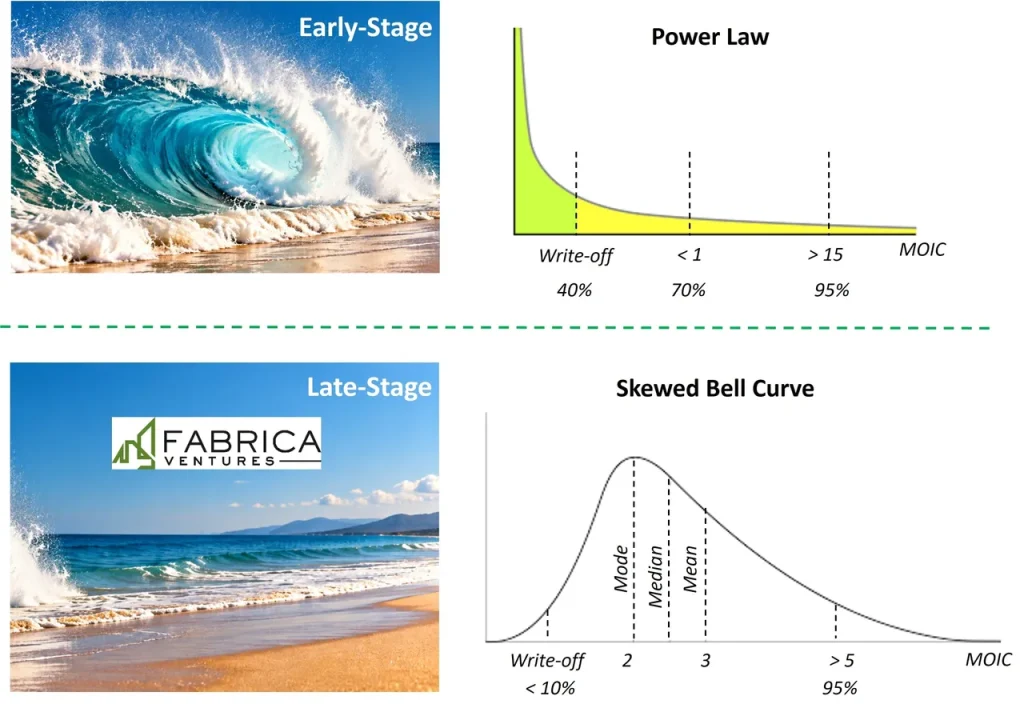
Marks draws important distinctions. Mature companies such as Microsoft, Amazon, and Google may or may not be overvalued, but they are enormously profitable businesses. Early-stage AI startups, on the other hand, often resemble lottery tickets: most will fail, but a handful could generate extraordinary returns.
Conclusion
Howard Marks reminds us that the right question is not whether AI is a bubble, but which AI companies will become enduring winners.
In Fund II (2023 vintage), we invested early in several of them, including Anduril, Anthropic, Circle, CoreWeave, Databricks, Dragos, Egnyte, Groq, Intercom, Lambda, Shield AI, and Verkada.
That remains the ambition of Fabrica Ventures Fund III: to identify tomorrow’s AI leaders before they become household names.