Cerebras Monster IPO
Insights from Fabrica Ventures Team.

Forward-Deployed Engineers: The Palantir Playbook Exported to AI
May 14, 2026
The Real Signal Behind CNBC’s Disruptor 50
May 24, 2026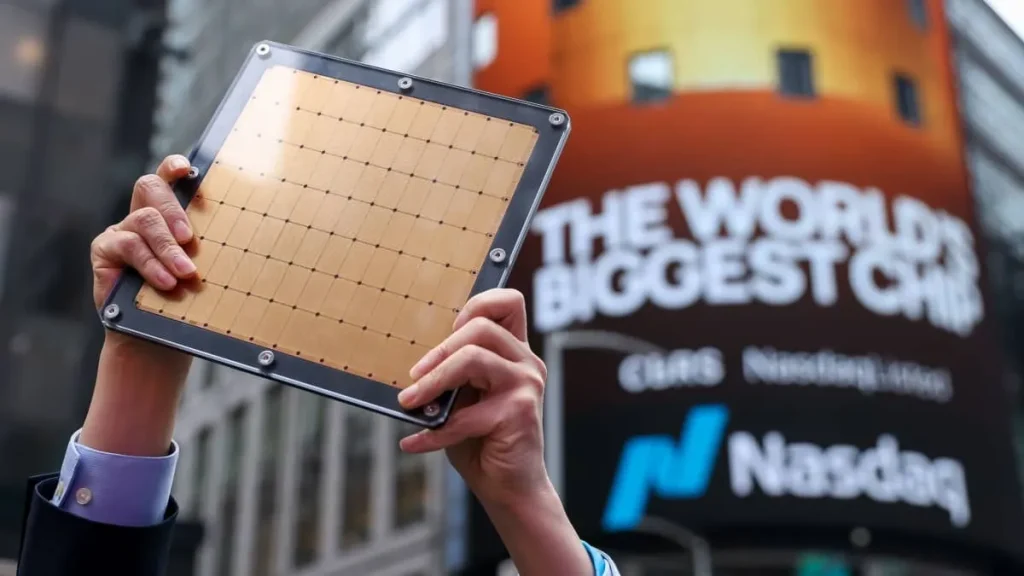
If there was any doubt that public market investors were desperate for AI exposure, Cerebras’ IPO answered it.
Earlier this week, Cerebras increased both the price range and size of its long-awaited IPO from $115–$125 per share to $185, ultimately raising $5.5B. But the real shock came after the opening bell: the stock debuted at an astonishing $350 per share on Nasdaq, giving the company a market capitalization north of $75B — larger than Banco BTG Pactual and Banco Bradesco combined.
Since Fabrica Ventures (FV) became an early investor in Cerebras back in January 2022, PitchBook (PB) approached us for an interview for its article, “Cerebras’ blockbuster public listing sets stage for AI IPO frenzy.”
Below is a summary of how my conversation with the PitchBook reporter unfolded.
(PB) How did you get to Cerebras?
(FV) Our first filter is simple: most of our LP base is composed of Brazilian investors seeking exposure to true technology startups — businesses where technology is the product itself, not merely an enabler of the offering.
Being based in Palo Alto, and given Silicon Valley’s deep semiconductor heritage, we believed we had to build exposure to AI chips. Two names stood out early on: Cerebras and Groq, and we invested in both.
At the time, the market largely viewed Cerebras as a training-focused architecture, while Groq was associated with inference. But over time, Cerebras’ extraordinary speed increasingly positioned it as a highly competitive inference solution as well — particularly important given that inference is expected to become a far larger market than training itself.
(PB) How could you have known that AI chips would become such a massive market?
(FV) At the time, virtually every industry projection already pointed toward explosive growth in AI compute demand and semiconductor spending. The opportunity was clearly emerging well before the broader public fully appreciated it.
But the launch of ChatGPT at the end of 2022 became a major validation point. It showed the world that generative AI was a true platform shift. From that moment on, demand for increasingly powerful and efficient AI infrastructure only accelerated.
(PB) What was your expected outcome for Cerebras?
(FV) The semiconductor industry has been consolidating for decades, so our initial expectation was that successful AI chip companies would eventually exit through M&A — exactly what happened with Groq, which was acquired by Nvidia for approximately $20B, a price that now almost looks like a bargain.
In fact, shortly before its IPO, Cerebras reportedly received acquisition interest from Arm and SoftBank
I am glad Cerebras ultimately chose the public markets instead. It may have just opened the floodgates for a new wave of AI IPOs.
(PB) Was there a key factor that made you invest in Cerebras?
(FV) There is no doubt that Cerebras’ wafer-scale chip technology was a true breakthrough. But what really impressed us was Andrew Feldman, the company’s founder and CEO. From the beginning, we could sense he was the type of leader with a “mission given, mission accomplished” mentality.
A very different profile from Jonathan Ross, founder and CEO of Groq — whom we consider a pure genius — but equally impressive in his own way.
Conclusion
Nvidia still owns the real market.
Cerebras owns the optionality.