Groq: Nvidia’s Largest Acquisition Ever
Insights from Fabrica Ventures Team.

Fast and Furious
December 22, 2025
No Crystal Ball Required: VC 2026
January 5, 2026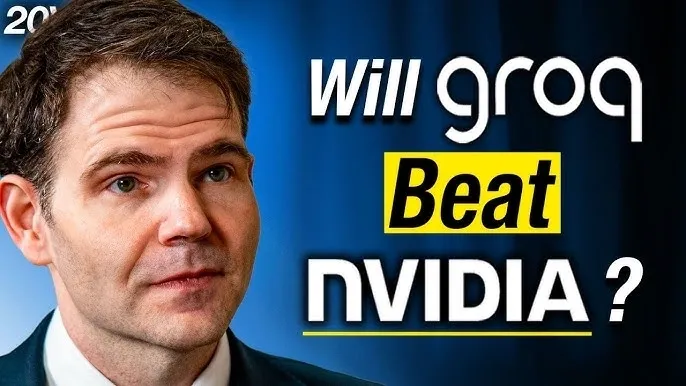
On Christmas Eve, Nvidia (market cap ~$4.6T) announced the acquisition of AI chipmaker Groq for around $20B in cash (the exact terms are still not public), its largest transaction to date. In line with an increasingly common deal structure designed to avoid regulatory delays, Nvidia will license all of Groq’s assets and onboard its entire executive team.
As attested by the divergence in market valuations in recent months, Nvidia’s GPU-centric architecture has begun to lose momentum to Google’s TPU (Tensor Processing Unit), a chip purpose-built for the inference era. Rather than develop a tensor-native architecture from scratch, Nvidia chose to acquire it — buying Groq, the startup founded by the father of the TPU, Jonathan Ross, who left Google with a group of engineers to start Groq nine years ago, in December 2016.
Groq’s LPU (Language Processing Unit) incorporates several compelling architectural innovations, specially tailored for inference. Most notably, it employs a deterministic design, enabling precise control over computation timing, unlike Nvidia’s largely nondeterministic GPU architecture. The LPU also integrates several hundred megabytes of on-chip SRAM, making the chip more performant and energy-efficient than GPUs that rely on HBM. At the system level, Groq links LPU-based servers into large-scale inference clusters using its internally developed RealScale interconnect, addressing coordination challenges such as crystal-based drift, which can otherwise disrupt synchronization across distributed AI servers.
Groq has raised a total of $1.8B. Fabrica Ventures participated in the company’s last two rounds: the Series D in August 2024 at a $2.8B valuation, and the Series D-3 in September 2025 at a $6.9B valuation. Strikingly, the Nvidia’s transaction implies a nearly 3x valuation step-up in just three months.
Groq is expected to reach ~$500M in revenue in 2025, largely driven by cloud services, implying that the acquisition — again structured as a “nonexclusive license agreement” — values the company at 40x revenue.
Conclusion
Hearing Jonathan Ross speak (there are several videos on YouTube) left no doubt that he is a rare combination of technical and business brilliance.
Investing in Groq therefore felt like an obvious decision.