Defense, Rewritten by AI: Shield AI’s Software-Defined Platform
Insights from Fabrica Ventures Team.

Orgs in the Age of Agents
March 27, 2026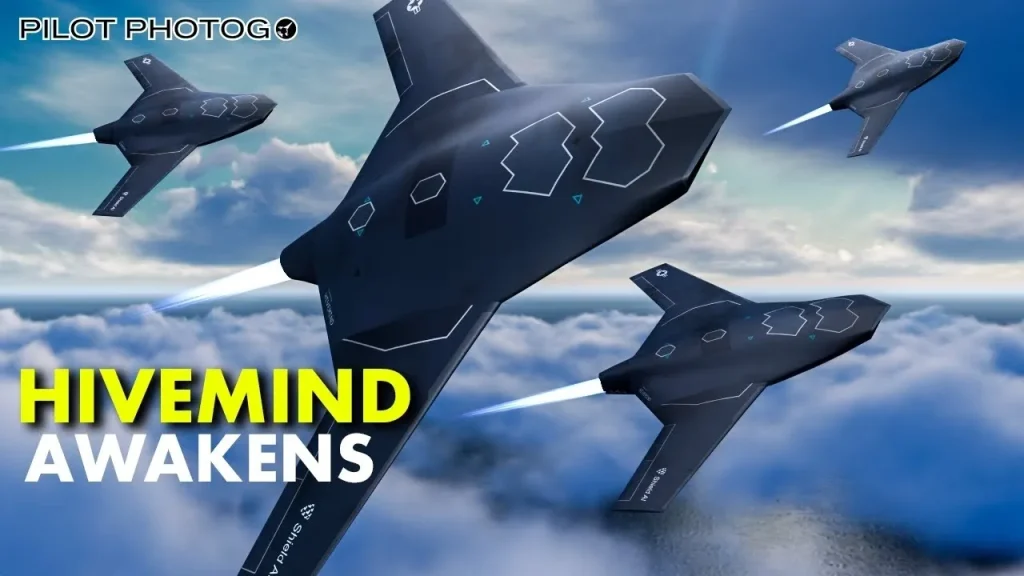
Defense tech has been on a tear lately, emerging as one of the clearest beneficiaries of a rapidly shifting geopolitical landscape. Venture capital deployment into the sector reached record levels in 2025, with $18B invested globally — up 134% year over year — led by large equity rounds into companies building aerial platforms and AI-driven systems.
In this context, Shield AI announced last week a $1.5B Series G round at a $12.7B post-money valuation. Part of the proceeds will help fund the company’s planned acquisition of Aechelon Technology, a defense software company known for its high-fidelity simulation, physics-based sensors, and synthetic reality applications.
Historically, innovation in the defense industry has been led by hardware. However, the next generation of warfare is being driven by AI software, working in concert with hardware. Against this backdrop, Shield AI’s core product is Hivemind — an AI pilot that enables autonomous flight for military drones and aircraft without GPS, communications, or human pilots. On the hardware side, Shield AI manufactures V-BAT, a vertical takeoff and landing (VTOL) unmanned aircraft system, and Nova 2, a small quadcopter drone acting as a digital scout—both powered by Hivemind.
Shield AI’s growth trajectory has been remarkable — it is now working with 8 of the top 25 US defense contractors, with Hivemind integrated into platforms such as General Atomics’ MQ-20 unmanned combat aerial vehicle, Kratos’ BQM-177A target drone, and Airbus’ H145 twin-engine light utility helicopter.
Consequently, its valuation has surged — from $2.7B in early 2024, when Fabrica Ventures invested, to $12.7B just two years later.
Importantly, Shield AI and other defense tech startups are reshaping the defense contracting model. Traditional primes like Lockheed Martin or Boeing build to RFPs under cost-plus contracts, earning 5–10% margins.
By contrast, Shield AI and the new wave of defense tech startups front-load R&D and offer pre-built products to the military — operating like tech companies, with 40–50% margins, bringing defense economics closer to software than traditional contracting.
Conclusion
VC-led AI has changed how militaries develop new technology.
As consumer drones began destroying $5M tanks across Ukrainian battlefields, global militaries realized the need to revamp their defense strategies. Silicon Valley was already there, funding a defense tech gold rush — and Shield AI has become one of the largest gold nuggets.
We believe this is just the beginning.