AI Will Replace All Software — Shoot Now, Ask Questions Later
Insights from Fabrica Ventures Team.

Brex Sale: A Good Outcome or Not So Much?
January 28, 2026
a16z: The Power Brokers
February 15, 2026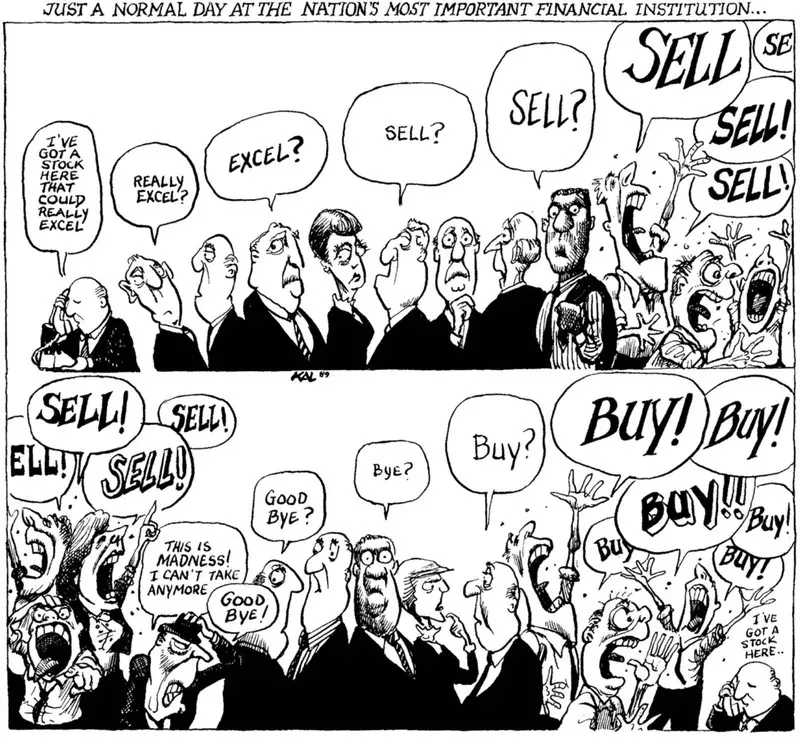
Legal tech has become one of the most dynamic verticals in VC over the past three years.
For decades, legal research operated as a comfortable duopoly dominated by Westlaw (Thomson Reuters) and LexisNexis (Reed Elsevier). Such structural concentration made the sector a natural target for disruption. The arrival of LLMs created that opening: a new generation of AI-native startups began unlocking vast libraries of case law, annotations, and structured data — fundamentally reimagining how legal knowledge is accessed and synthesized.
The result has been a wave of well-capitalized legal startups. From focused platforms like Tradespace, which streamlines intellectual property portfolio management, to category leaders like Harvey AI, drafting and reviewing contracts at scale, the sector has moved from experimentation to institutional adoption.
Harvey, in particular, stands out. In just 2.5 years, it reached $200M ARR, serves 1,000+ customers across 59 countries, employs 500+ people, and achieved an $8B valuation in its $160M Series F led by a16z in December 2025.
For the venture ecosystem — and for anyone already using LLMs daily for contract review and drafting — the impact of AI on legal has been obvious for some time. What seems surprising is not the technology’s capability, but that it only became a revelation to Wall Street this past Tuesday when Anthropic launched AI automation plug-ins for legal work, triggering one of the sharpest single-day selloffs in software stocks. The selling began in legal-adjacent names but quickly propagated across enterprise software, financial services, ad tech, and even PE funds with software exposure. [To be fair, software stocks were already trading at their lowest multiples in a decade, despite continuing to generate solid double-digit FCF growth].
The panic is existential. SaaS has long been viewed as durable — recurring revenue, defensible moats, predictable cash flow. After this Anthropic-triggered moment — dubbed the “SaaSpocalypse” — those moats appear vulnerable.
The massive GPU and data-center capex is building the infrastructure for an application-layer boom, much like fiber preceded the internet. Hyperscalers are laying the rails that both AI-native startups and SaaS incumbents will run on. The same infrastructure that enables disruption also enables incumbents to evolve.
With AI, code may become cheaper, but context is expensive. Incumbents control proprietary data, workflows, and security layers built over decades. AI agents depend on that context. Rather than being displaced, incumbents are integrating LLMs into their own agents.
The real transformation lies in unit economics and TAM. The $100-per-seat-per-month model is giving way to labor substitution, a value-based pricing shift. Instead of paying $70,000 for an employee supported by $1,200 in SaaS, a company may pay $6,000 annually for an AI agent performing much of that function.
For customers, that’s deflationary: $70,000 to $6,000.
For SaaS (reborn Agentic) vendors, it’s inflationary: $1,200 to $6,000.
Software budgets begin to tap into payroll — the largest line item on the income statement. TAM expands accordingly.
Conclusion
Markets move in herds. And sometimes the stampede is triggered by news that is not new.
This week’s selloff may prove a buying opportunity.