a16z: The Power Brokers
Insights from Fabrica Ventures Team.

AI Will Replace All Software — Shoot Now, Ask Questions Later
February 8, 2026
All Waters Run to the Sea
February 22, 2026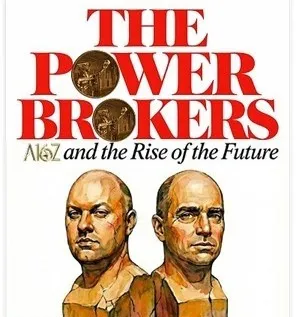
Packy McCormick published a long essay, The Power Brokers — a16z and the Rise of the Future, in January 2026, just as a16z raised a massive $15B in fresh capital across all its strategies, bringing total AUM to more than $90B.
There is little doubt that a16z has become the most dominant and institutionally scaled platform in venture capital.
In the worst fundraising market in five years, a16z captured 18% of U.S. venture capital raised in 2025. In a year when the average VC fund reportedly took around 16 months to close, a16z completed its raise in just over three months.
The essay is rich with investment stories and insider insights into a16z’s culture. Here, however, I will focus on the performance of a16z’s main funds, setting aside the parallel vehicles, which are numerous and span different strategies.
First Era (2009-2017) – Software is Eating the World
The table below (as of 9/30/2025) presents Fund, Date, Size ($), and Net DPI. Given the maturity of these funds, Net DPI is the most appropriate metric, as it captures realized distributions to LPs.
* I — 2009 — $300M — 6.0x
* II — 2010 — $656M — 3.5x
* III — 2012 — $996M — 5.5x
* IV — 2014 — $1,173M — 3.0x
* V — 2017 — $1,189M — 0.3x
Funds I through IV generated exceptional realized outcomes. Fund V remains in its harvesting phase, with a couple of years remaining, plus potential extensions. For Fund V, it is therefore appropriate to also consider Net TVPI (Total Value to Paid-In), which reflects total potential value creation, including unrealized gains that remain dependent on future liquidity events. Net TVPI for Fund V stands at 3.1x, a promising level at this stage of the cycle.
Second Era (2018-2024) – Dedicated Late-Stage Ventures (LSV) Funds
In addition to its traditional venture funds, a16z launched dedicated Late-Stage Venture (LSV) vehicles. The underlying thesis was that category winners were becoming significantly larger than anticipated and were remaining private for longer. Given the stage and liquidity profile of these funds, Net TVPI is included in the table below, which presents Fund, Vintage Year, Size ($), Net TVPI, and Net DPI:
* LSV I — 2019 — $2,262M — 3.3x — 1.9x
* LSV II — 2021 — $3,401M — 1.2x — 0.0x
* LSV III — 2022 — $5,095M — 1.4x — 0.1x
* LSV IV — 2024 — $3,557M — 1.1x — 0.0x
The four LSV funds are significantly larger than those of the previous era, totaling $14.3B in aggregate. LSV I has already generated meaningful realized distributions, while the subsequent vintages remain largely in their value-building phase. The increase in fund size unfolded against a more constrained liquidity backdrop, which helps explain the slower DPI ramp in subsequent vintages.
Conclusion
Fabrica Ventures’ Late-Stage Funds I and II (2020 and 2023 vintages) are generating DPIs above a16z’s LSV funds.
As a16z enters its third era — the AI era — we are evolving our positioning to capture this structural shift.