Ignore the Earnings Beat — Watch the Hyperscalers
Insights from Fabrica Ventures Team.

Excited to share an announcement from Fabrica Ventures that their Fund III will be powered by Sacra.
April 22, 2026
Forward-Deployed Engineers: The Palantir Playbook Exported to AI
May 14, 2026
(From São Paulo — arguably the best restaurant city in the world)
Last week, the tech giants Amazon, Alphabet, and Microsoft reported Q1 earnings.
All three beat expectations.
But that’s not the story. The real story sits beneath the surface: their hyperscaler engines, the backbone of the AI economy.
Google Cloud grew 63% YoY, Microsoft Azure 40%, and Amazon Web Services (the largest one, with sales of $37.6B in Q1) 28% — exceptional across the board.
Moreover, each hyperscaler invested over $30B in the quarter ($112B combined). Capex (and guidance) is going up. And yet, at the company level, all three still generate free cash flow.
But the most interesting signal on the health of AI came from Sundar Pichai (Alphabet’s CEO) on the earnings call — demand is not just strong, it is compounding:
“Our enterprise AI solutions have become our primary growth driver for cloud for the first time in Q1.”
“We are compute constrained in the near term. Our cloud revenue would have been higher if we were able to meet the demand.”
“We are seeing strong deal momentum, doubling the number of $100 million-$1 billion deals year-on-year & signing multiple $1 billion-plus deals.” — Google Cloud backlog: >$460B, nearly doubling QoQ, now more than 2x its trailing-twelve-month revenue.
“330 Google Cloud customers each processed over 1 trillion tokens. 35 reached the 10 trillion token milestone.” (translating into ~$1.6B in annual token consumption)
“Customers outpaced their initial commitments by 45%, accelerating over last quarter.”
Conclusion
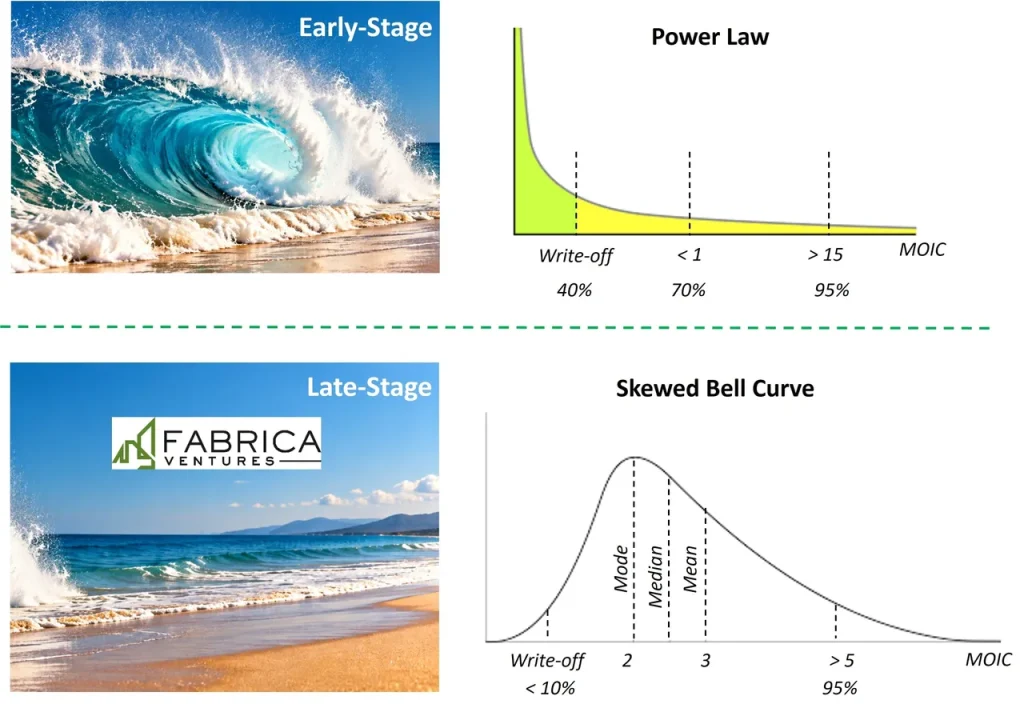
I ended my “Nazaré” post in January 2024 with:
“AI represents a generational shift — a new canyon for wave formation that will make Nazaré waves look like mere ripples.”
After Q1 from the hyperscalers, the signal is unmistakable: the tsunami is already forming.