After Palantir, Anduril
Insights from Fabrica Ventures Team.

The Curious Case of Plaid’s Journey
March 6, 2026
Fed Rails and Nasdaq Tokens
March 23, 2026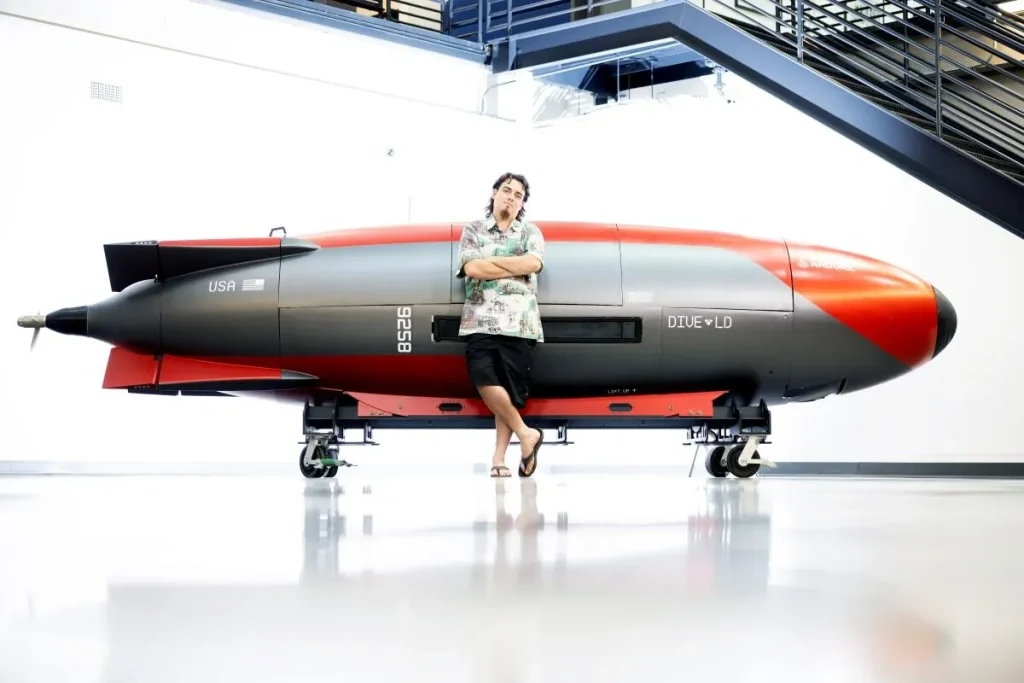
Accessing Anduril through the secondary market turned out to be one of the hardest companies for Fabrica Ventures to get into.
Our first approach was to partner with the family office of one of Sweden’s largest retail groups. Even with their scale and network, six months of negotiations led nowhere — no access to Anduril shares.
Only after another six months, and thanks to long-standing relationships in the Valley, were we finally able to secure a position.
When it takes a year — and the right relationships — just to access the cap table, you realize scarcity isn’t a constraint, it’s part of the signal.
Then the market delivered its verdict. Last week Anduril announced a $4B round at a $60B valuation — almost doubling its value in less than a year after raising $2.5B at $30.5B in June 2025. Total funding now reaches $10.4B.
Even so, the company is still expected to post operating losses of more than $1B in 2026. The new capital is meant to absorb the heavy investments — and the losses — projected through the end of the decade, as Anduril pushes toward $16B in annual revenue by 2030.
The funding round came just a week after the US launched Operation Epic Fury in Iran. Anduril co-founder Trae Stephens confirmed that the company’s technology is being used by the US military in the operation, noting that Anduril has “counter-air systems present in conflict zones” and that the company is “actively working day to day” on ongoing operations.
When Anduril was founded in 2017, its core bet was simple but controversial: autonomous weapons systems would gradually replace expensive legacy defense platforms on the modern battlefield. Less than a decade later, that thesis is increasingly being validated.
Conclusion
Our bet was that Anduril will go public before the end of the Trump administration, helped in part by the proximity to the current defense and political ecosystem in Washington.
At first glance, the valuation looks extreme. At roughly $60B, Anduril is commanding a revenue multiple of about 27x, compared with 2-3x for traditional defense incumbents such as RTX and Lockheed Martin.
But Anduril has fundamentally changed the business model. Instead of the traditional cost-plus defense contracting, the company invests upfront in weapons development, builds proprietary platforms, and then sells them at much higher gross margins.
We have seen this movie before. Palantir, a software-driven defense contractor of the AI era, now trades at more than 75x revenue.
We have little doubt that Anduril could trigger a similar market commotion when it reaches the public markets.